


Aram Wood, Senior Director – Floating Solar, explains Bluefield’s ‘water first’ approach to FPV, and how it relates to recent sector analysis by CBI Economics.
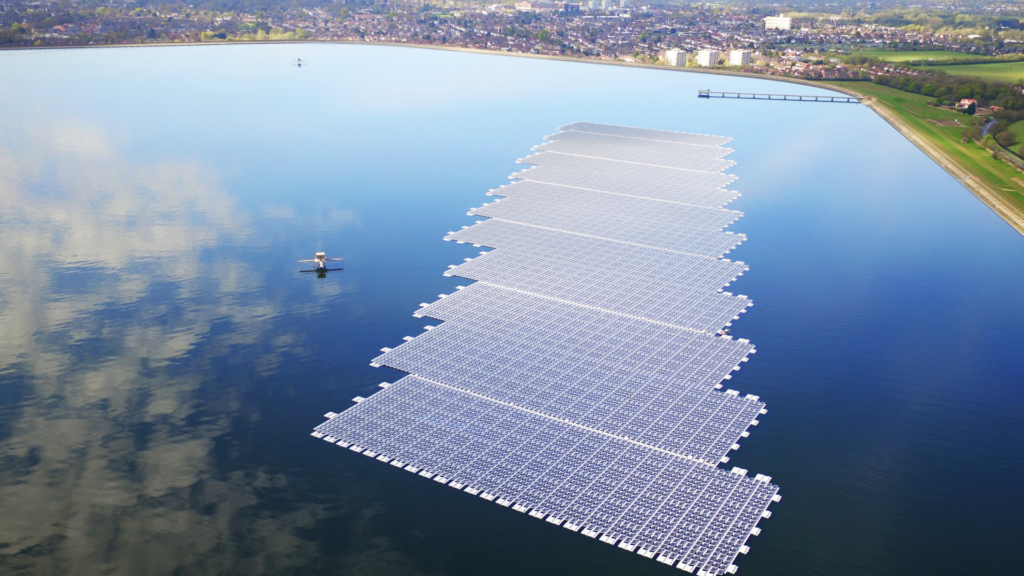
Floating solar (FPV) has evolved from an emerging technology into a credible commercial proposition, poised to scale rapidly and become a meaningful contributor to the UK’s future energy system. But as momentum builds, so does the responsibility to deploy it in a way that strengthens – not competes with – the water sector. That’s why Bluefield has taken a water first approach to FPV: an approach grounded in evidence, collaboration and long term stewardship of critical national infrastructure.
Our recent work with CBI Economics, which produced the first in depth economic analysis of the UK FPV market, reinforces this point. The report highlights the scale of the opportunity – both in terms of clean energy generation and wider economic value – but it also makes clear that FPV succeeds only when it is designed around the needs, constraints and priorities of water asset owners.
Why water first matters
Reservoirs and other managed water bodies are not empty spaces waiting to be filled with solar panels. They are operational assets with complex hydrology, environmental sensitivities and essential public service functions. A water first approach recognises that:
- Water security comes first. FPV must never compromise drinking water quality, treatment processes or reservoir operations.
- Operational compatibility is essential. FPV should integrate with existing water sector workflows, not add friction or risk.
- Environmental integrity is non negotiable. Every installation must be assessed for ecological impact, with designs that protect biodiversity and support long term resilience.
- Co benefits are possible. When done well, FPV can reduce evaporation, improve water quality through shading, and support net zero commitments across the sector.
This is not just good practice – it’s good economics. The CBI Economics analysis shows that FPV can unlock significant investment, create skilled jobs and accelerate decarbonisation, but only if deployment is trusted by the water industry and aligned with its regulatory obligations.
Evidence based deployment
The UK now has a robust evidence base to guide responsible FPV growth. The CBI Economics report highlights:
- The scale of technically suitable water bodies across the UK
- The importance of industry standards and best practice to ensure safe, sustainable roll out
- The economic contribution FPV could make through investment, supply chain growth and job creation
- The policy and regulatory enablers needed to unlock deployment
Partnership with the water sector
A water first approach is ultimately a partnership approach. It means working with water companies, regulators, environmental bodies and local communities from the outset. It means designing FPV systems that respect the operational realities of each site. And it means ensuring that the benefits – clean energy, reduced emissions, improved resilience – are shared.
Drawing on my background in aquatic resource management and my experience leading renewable energy for the UK’s largest water company, I know that FPV must be developed in partnership with the water sector to succeed at scale. At Bluefield, we’ve built a specialist FPV team with deep experience across both water and energy infrastructure, enabling us to design projects that meet the highest technical, environmental and operational standards.
Unlocking the next phase of growth
The UK is at a pivotal moment. With the right policy framework, FPV can become a meaningful contributor to national energy security. But growth must be responsible, evidence led and aligned with the needs of the water sector.
A water first approach is not a constraint – it’s the foundation for sustainable scaling. It ensures FPV earns and maintains the trust of asset owners, regulators and the public. And it positions the technology as a long term partner in the UK’s transition to a resilient, low carbon future.
Floating solar is ready to grow. The evidence is there. The opportunity is clear. Now is the moment to build it – responsibly, collaboratively, and with a water first approach.
Disclaimer:
Imagery provided by ZIMMERMAN and Ciel & Terre International